Securing a professional Pest Control Service in Memphis protects household environments from structural degradation and contamination caused by aggressive regional insect populations. Homeowners seeking reliable pest control near me gain immediate relief through targeted biological barrier treatments rather than arbitrary surface sprays.
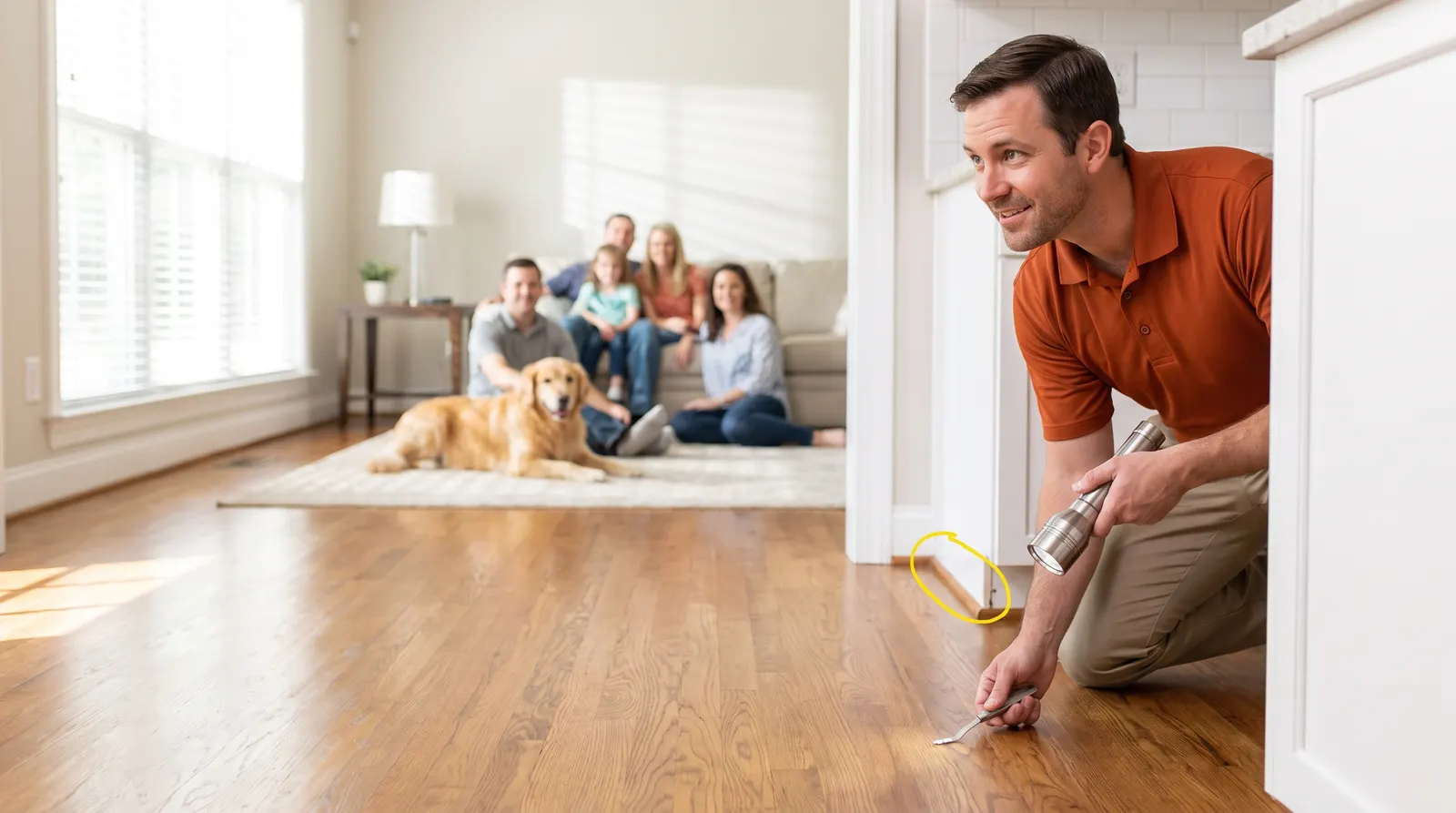
A professional Pest Control Service in Memphis is an integrated pest management and chemical barrier application system designed to safely eliminate domestic insect and rodent colonies from residential properties across Shelby County.
Every service reflects the same meticulous attention to detail, whether it's a single job or a larger pest control service project across Memphis.
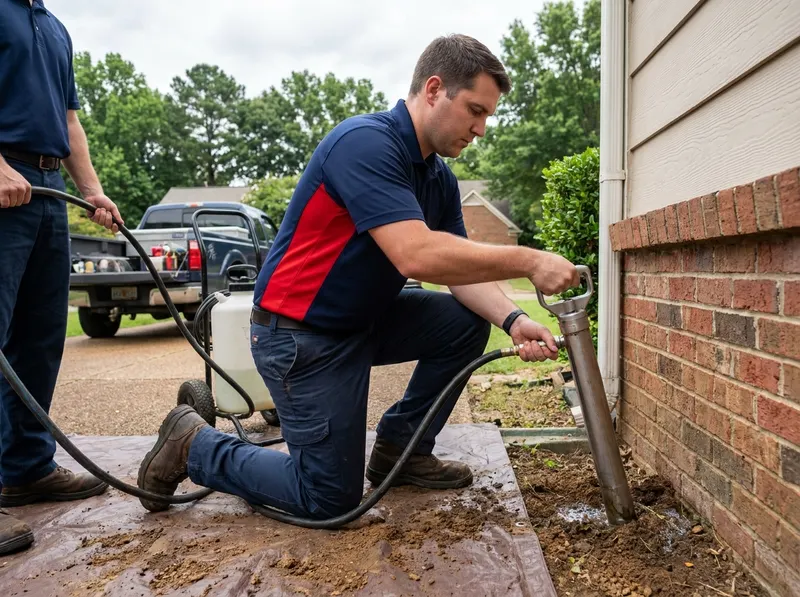
Subterranean termite eradication establishes liquid chemical barriers and non-repellent termiticide trenches along structural foundation walls, eliminating Reticulitermes flavipes colonies before foundation framing sustains structural compromise. Treatments align with standard pest control practices outlined by the Tennessee Department of Agriculture to protect properties throughout Shelby County. Technicians rod liquid non-repellent termiticides down to the footing depths, spacing injection points at precise 12-inch intervals along perimeter brick ledges, stem walls, and structural piers. Subterranean worker termites track the non-detectable chemistry across their cuticles and distribute the active agent throughout their deep subterranean central nests via social grooming, neutralizing reproductive queens without dispersing toxic fumes into interior living areas.
Get a quote →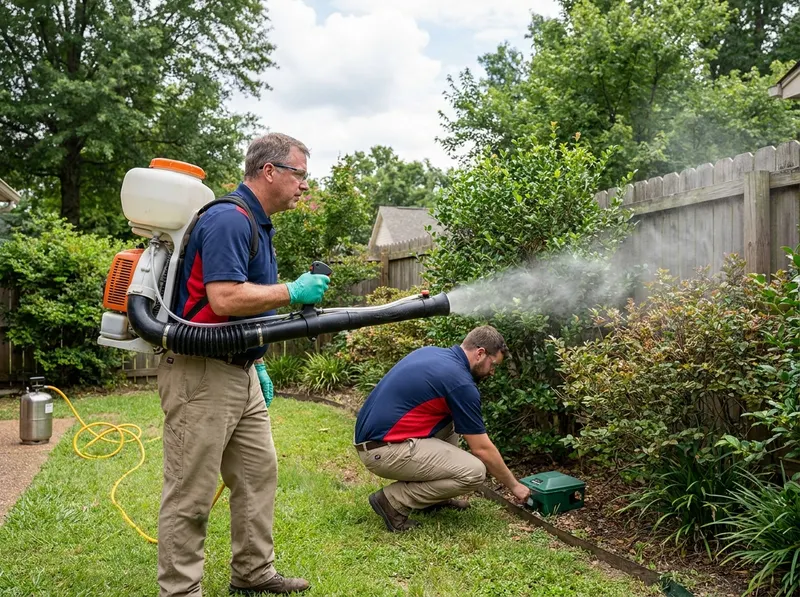
Mosquito management applies microbial larvicides and targeted foliage misting across dense ornamental vegetation and shade zones to interrupt the reproduction cycle of Culex mosquitoes. Biological larvicides like Bacillus thuringiensis israelensis align with guidelines from the Environmental Protection Agency to suppress airborne vectors without degrading residential garden soil. Technicians focus on shaded lower canopies, drainage ditches, gutter discharge zones, and decorative planting beds where female mosquitoes harbor during peak daylight heat. Precision droplet regulation prevents airborne drift toward domestic vegetable gardens, children's swing sets, and outdoor pet kennels while dramatically lowering adult biting populations across outdoor living spaces from early summer through mid-autumn.
Get a quote →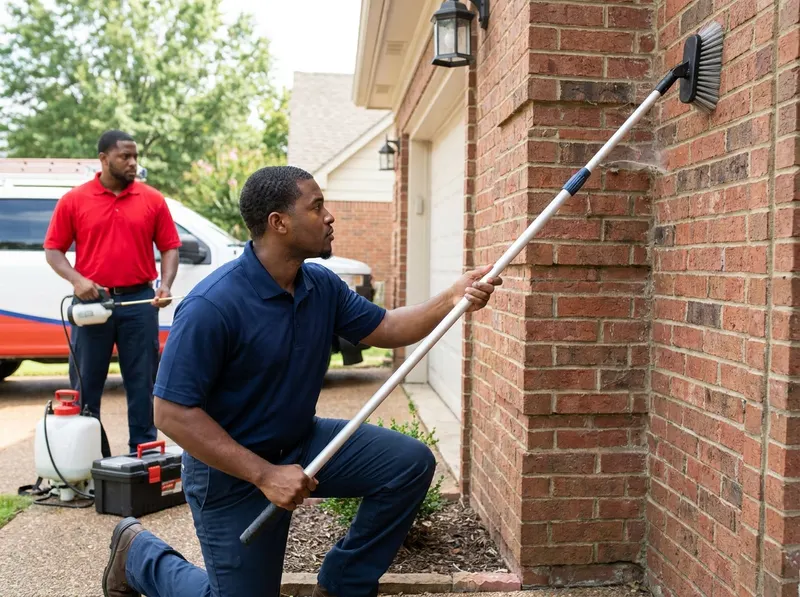
Spider management targets brown recluse (Loxosceles reclusa) and wolf spider populations harbored in crawlspaces, attics, and dark wall voids. Technicians place microscopic desiccant dusts and adhesive monitoring grids according to structural safety manuals published by the National Institute for Occupational Safety and Health , eliminating venomous arachnids without leaving wet residues on home textiles. Amorphous silica dusts physically absorb the waxy outer lipid layers of the spider's exoskeleton, inducing rapid dehydration without reliance on volatile neurotoxins. Physical webbing removal from baseboard recesses, ceiling corners, and storage closets prevents egg sac development while reducing food prey availability within finished living zones.
Get a quote →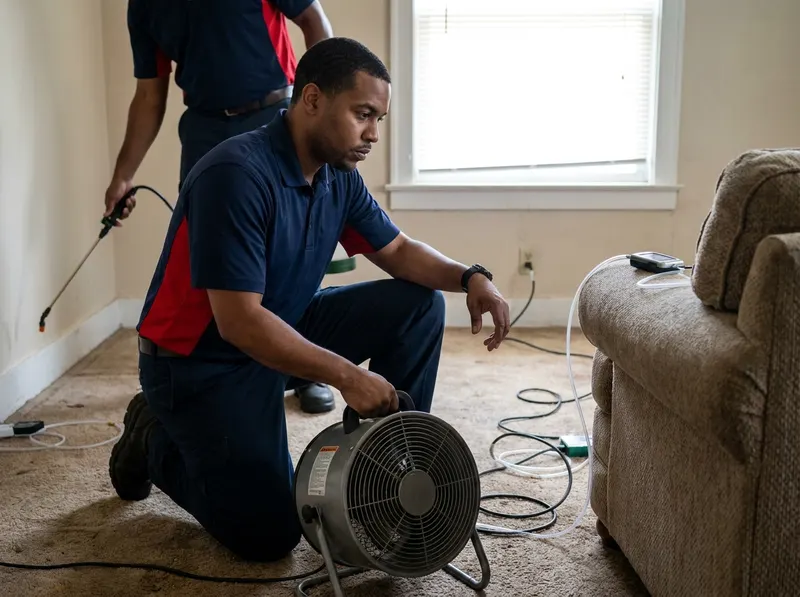
Bed bug eradication uses directed heat exposure above 122 degrees Fahrenheit combined with contact-kill residual applications to penetrate box springs, headboards, and floorboards. This dual method eliminates all life stages of Cimex lectularius based on pest eradication protocols verified by the Centers for Disease Control and Prevention , preventing eggs from hatching inside sleep quarters. High-output thermal convective systems circulate superheated clean air into deep mattress seams, baseboard joints, and structural wall framing where nocturnal insects shelter. Companion non-pyrethroid micro-encapsulated residuals provide an active secondary perimeter defense for up to 90 days, ensuring that any external reintroductions via luggage or clothing cannot establish new reproductive footholds.
Get a quote →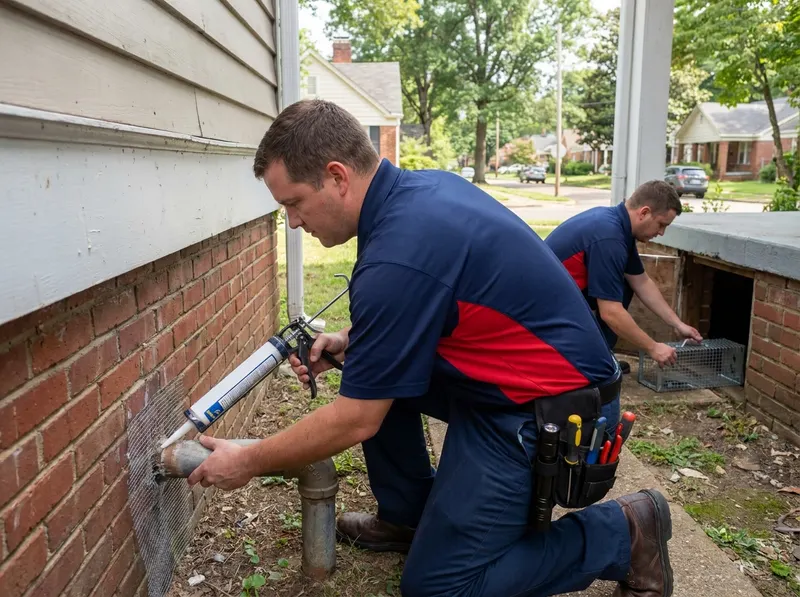
Rodent removal eliminates Norway rats, roof rats, and house mice through tamper-resistant tamper-evident interior capture systems and heavy-gauge galvanized hardware cloth entry sealing. Technicians inspect exterior perimeters to block foundation gaps larger than one-quarter inch, adhering to humane containment standards set forth by the Animal and Plant Health Inspection Service . Structural repairs focus on sealing air conditioning chase penetrations, warped crawlspace hatch doors, and soffit-to-roofline intersections with rust-proof stainless steel mesh and structural polyurethane sealants. Mechanical snap stations deployed inside inaccessible crawlspaces and attic trusses quickly neutralize established populations without utilizing anticoagulant rodenticides that present secondary poisoning hazards to family pets.
Get a quote →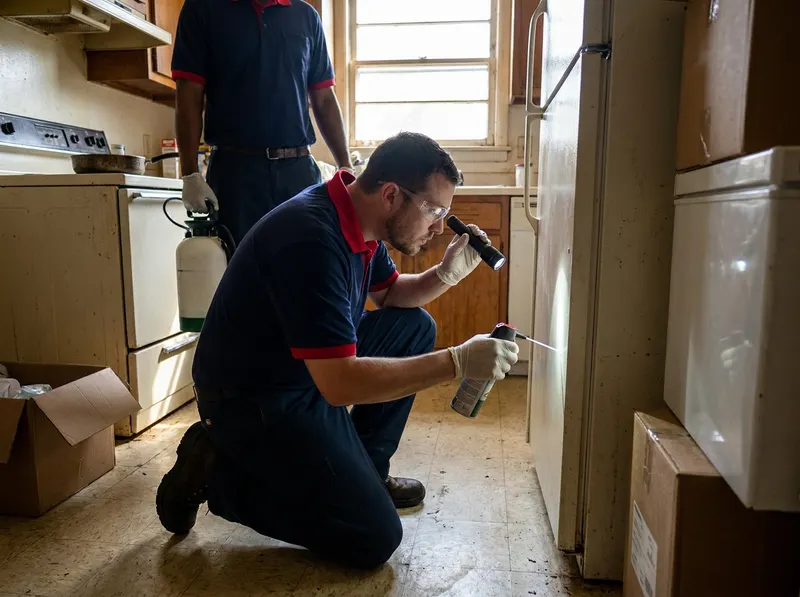
Cockroach remediation uses specialized insect growth regulators and abamectin gel baits to eradicate German cockroach aggregations in kitchen pantries and plumbing chases. By breaking the nymphal reproduction cycle, this targeted approach addresses respiratory allergens cataloged by the National Institute of Environmental Health Sciences , eliminating airborne asthma triggers in family living areas. Technicians deploy targeted bead placements inside cabinet hinge plates, behind heavy dishwashers, and along interior utility service chaseways. The insect growth regulators inhibit chitin synthesis, rendering young nymphs sterile and preventing adult females from forming viable ootheca egg capsules, collapsing indoor populations without contaminating food preparation surfaces.
Get a quote →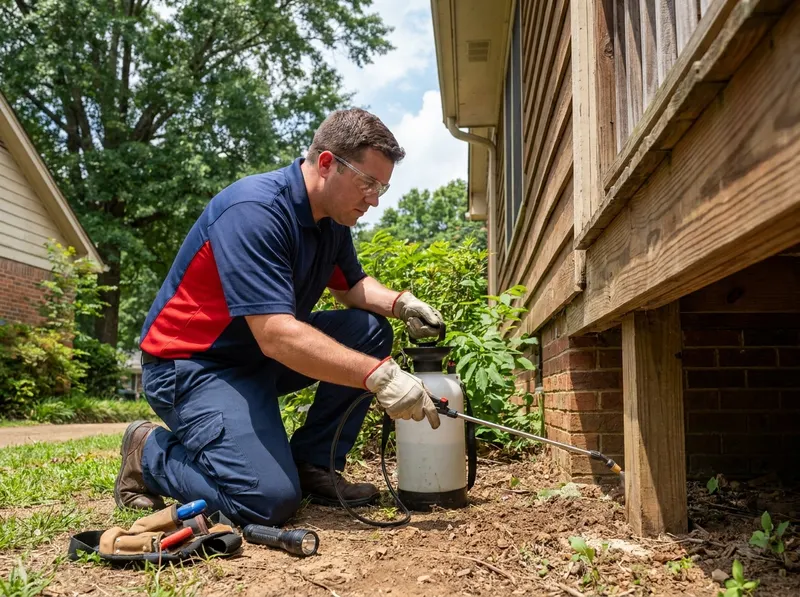
Ant remediation targets subterranean satellite nests and odorous house ant pathways using slow-acting fipronil and borate baits. Foragers carry active non-repellent agents deep into parent nests beneath crawlspaces and timber decks, clearing out destructive carpenter ant colonies in accordance with wood preservation guidance from the United States Forest Service . Technicians isolate structural timber junctions showing evidence of moisture intrusion and fine wood frass, treating structural framing voids with mineral borate injections. Exterior perimeter liquid treatments disrupt exterior pheromone trails along concrete patio edges, foundation brick ledges, and landscape timbers, preventing seasonal foraging migrations toward interior kitchens and bathrooms.
Get a quote →Stinging insect management removes bald-faced hornet paper nests, yellowjacket ground burrows, and paper wasp colonies from eaves, soffits, and exterior door lintels. Technicians apply non-aerosol freezing agents and manual physical extractions according to home safety standards documented by the Consumer Product Safety Commission , neutralizing aggressive territorial colonies without spreading airborne chemical drifts. Nests located in high-traffic entryways, garage overhangs, and wooden window shutters are mechanically detached and sealed into disposal containers during cool morning or dusk hours when worker insects remain clustered inside. Residual surface repellents applied to original attachment points deter newly arriving queens from rebuilding nests in identical architectural anchor points.
Get a quote →You get a firm, itemized quote for your pest control service before any work begins, no surprises, no pressure.
Careful prep, tidy work, and a full cleanup when we are done. We treat your home and belongings like our own.
The same trusted, background-checked team from the first call to the final check.
If you want targeted eradication of immediate indoor surface pests, choose targeted spot application and baseboard crack-and-crevice treatments. If you want perimeter containment against migrating soil colonies, choose multi-zone exterior soil saturation and perimeter liquid barriers. The trade-off is interior disruption and immediate knockdown speed versus long-term exterior property defense and subterranean nest interception.
Choosing full physical exclusion seals crawlspace vents, brick weep holes, and rooflines to prevent re-entry, whereas routine chemical maintenance requires scheduled exterior reapplications to maintain an unbroken protective barrier across shifting Memphis seasons. For properties situated on expansive alluvial loam deposits common along the Mississippi River bluffs and Nonconnah Creek basin, soil-injection liquid termiticides provide continuous subterranean protection for 5 to 8 years, whereas above-ground baiting stations necessitate bi-monthly monitoring cycles to detect colony interception before structural timber contact occurs. When addressing heavy indoor German cockroach aggregations, selecting precision abamectin gel baiting preserves indoor air purity and protects young children and domestic animals from aerosol inhalation, though it demands 14 to 21 days for full colony collapse through horizontal transfer; conversely, mechanical flushing agents provide instant knock-down of visible adult populations but risk dispersing gravid females into adjacent wall voids and ceiling tracks if applied without companion insect growth regulators.
Every project gets a firm, written price after a free on-site visit. Ranges below for orientation.
Tell us about your pest control service job and we'll send a clear, written quote, usually the same day. Or just call and talk to a real Memphis pro.
(615) 537-0359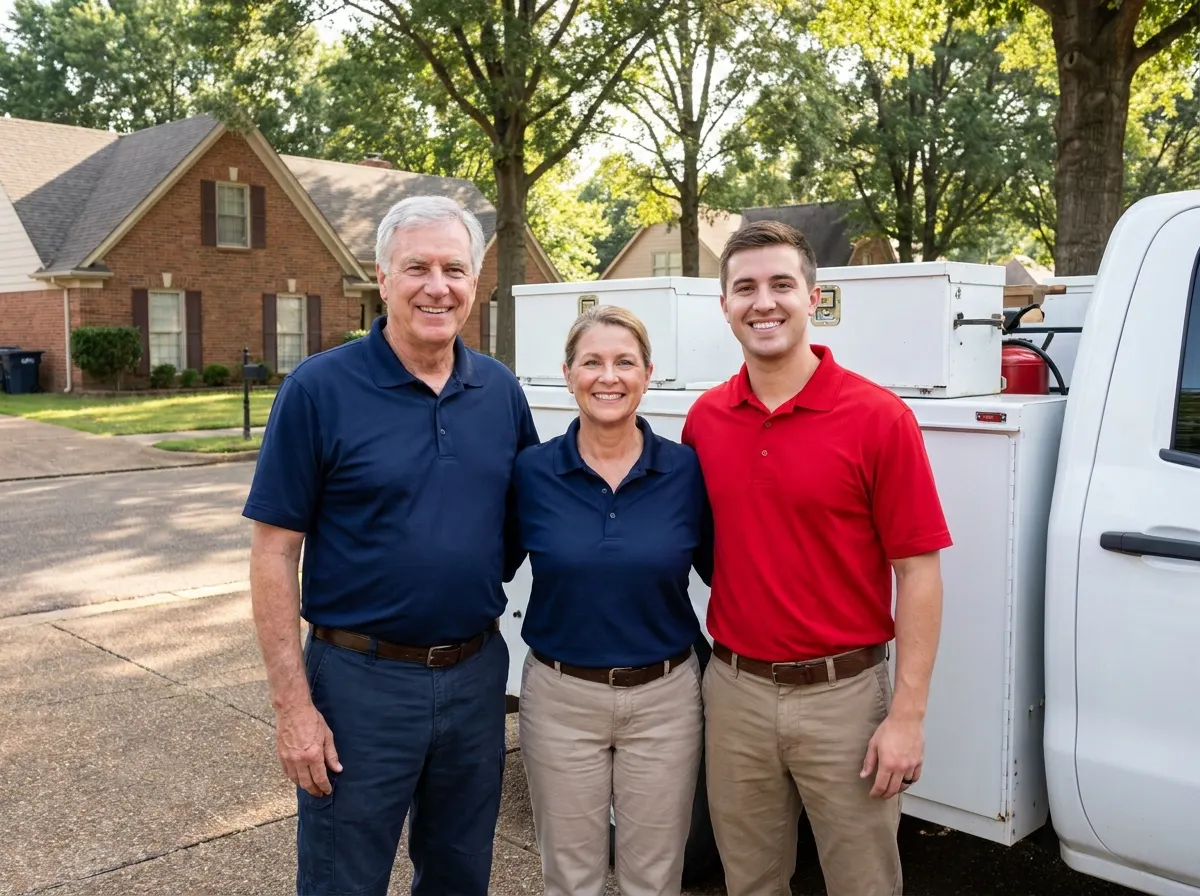
Properties throughout Shelby County face substantial moisture and dense alluvial soil conditions that support high subterranean insect volume. From the older historic foundations of Central Gardens and Cooper-Young to post-war crawlspaces near High Point Terrace and the low-elevation drainage pathways surrounding Shelby Farms Park and Overton Park, residential foundations continually absorb groundwater that attracts Reticulitermes termites and Argentine ants. Managing local humidity, wood rot risk, and seasonal crawlspace ventilation prevents recurring invasions caused by Memphis's intense summer precipitation cycles. The dense loess clay soil layers situated throughout East Memphis and Binghampton expand significantly during spring downpours and contract sharply during August drought periods. This continuous soil movement causes microscopic fractures in poured concrete stem walls and mortar joints across vintage brick foundations in Berclair and Frayser. Subterranean termite foragers, measuring less than one-eighth of an inch, exploit these sub-surface fractures to penetrate untreated floor sill plates and wall studs. Furthermore, heavy shade canopies generated by mature oak and pecan groves in historic Midtown neighborhoods drop large volumes of organic debris directly into valley gutters and roof junctions. When unchecked, this decomposing vegetation holds moisture against wooden fascia boards and eaves, creating primary nesting conditions for carpenter ants and destructive satellite colonies of acrobat ants. Residential yards situated adjacent to public green spaces, including the Wolf River Greenway and the wetlands bordering Liberty Park and the National Civil Rights Museum district, experience substantial pressure from roof rats (Rattus rattus) seeking shelter in heated attic insulation as soon as overnight temperatures drop across the mid-South in late autumn. Implementing exterior physical exclusion along foundation vents, sealing mortar penetrations around older iron plumbing stacks, and deploying low-toxicity perimeter liquid zones creates a resilient barrier that withstands Shelby County's sub-tropical climate conditions year-round.
Free estimates for Memphis & the surrounding area.
 BlueHearth Insect Removal